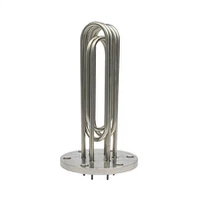
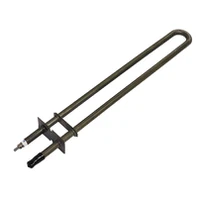
Early Beginnings (Late 19th – Early 20th Century)
The concept of electric heating elements emerged in the late 1800s with the advent of resistance heating. Early heating tubes were simple metal sheaths with internal resistance wires, primarily used in laboratory and domestic applications. However, their efficiency was limited due to poor heat dissipation.
The introduction of fins-metal strips or helical wraps around the tube-marked a breakthrough. By increasing the surface area, finned tubes improved heat transfer, making them suitable for industrial processes. Early designs were crude, often hand-welded, and used in steam boilers and early HVAC systems.

Mid-20th Century: Industrial Adoption & Material Advancements
The post-World War II industrial boom accelerated finned heating tube innovation. Key developments included:
Material Improvements: Transition from carbon steel to stainless steel, Incoloy, and other corrosion-resistant alloys.
Manufacturing Techniques: Automated fin welding (such as high-frequency welding) replaced manual methods, enhancing durability and consistency.
Diverse Applications: Expanded use in oil refineries, chemical processing, and electric heaters

Late 20th Century: Efficiency & Customization
As energy efficiency became a priority, finned heating tubes evolved with:
1.Optimized Fin Designs: Spiral fins, L-foot fins, and embedded fins for better thermal conductivity.
2.Advanced Insulation: Magnesium oxide (MgO) insulation improved electrical safety and heat retention.
3.Customization: Manufacturers began offering tailored solutions for aerospace, food processing, and plastic molding industries.

21st Century: Smart Heating & Sustainability
Modern finned heating tubes integrate cutting-edge technology:
1.Smart Controls: Compatibility with IoT-enabled temperature regulation systems.
2.Eco-Friendly Designs: Energy-efficient models with reduced carbon footprints.
3.High-Performance Coatings: Anti-scaling and anti-corrosion treatments for harsh environments.

Future Trends
The future lies in nanotechnology-enhanced materials, ultra-high-efficiency designs, and renewable energy integration (e.g., solar-thermal hybrid systems). As industries push for sustainability, finned heating tubes will continue to adapt, ensuring their relevance in next-generation heating solutions