What Is a Flange Immersion Water Heater?
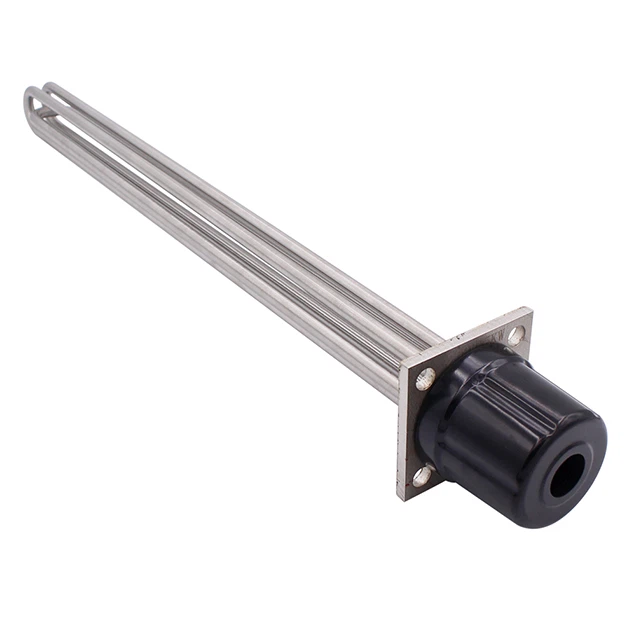
A flange immersion water heater typically consists of one or more tubular heating elements mounted on a metal flange.
The flange is installed on the wall of a water tank or heating vessel, while the heating elements extend directly into the water. When electrical power is supplied, the resistance wire inside the heating element generates heat, which is transferred through the heater sheath directly into the surrounding water.
Because the heating elements are in direct contact with the liquid, immersion heating provides efficient heat transfer and fast heating performance.
A typical flange immersion water heater may include:
- Tubular heating elements
- Stainless steel or other corrosion-resistant heater sheaths
- A customized mounting flange
- Electrical terminals or connection boxes
- Temperature sensors or thermostats
- Thermal protection devices
- Customized wiring and connectors
Depending on the application, the entire heating assembly can be designed as a simple heating element or as a complete heating module with temperature sensing and safety protection.

Why Flange Immersion Heaters Are Suitable for Drinking Water Equipment
Water heating systems used for drinking water applications often have specific requirements. The heater must provide sufficient heating power while maintaining reliable operation and compatibility with the water tank and the overall equipment design.
Flange immersion heaters offer several important advantages.
Direct and Efficient Heat Transfer
Since the heating elements are immersed directly in the water, heat is transferred efficiently without the need to heat an external surface or rely on indirect heat transfer.
This can help reduce heating time and improve overall energy efficiency.
Flexible Power Design
The heating power can be customized according to the water volume, target temperature, heating time, and available power supply.
For example, different designs may be required for:
- Small drinking water dispensers
- Commercial hot water dispensers
- Large water tanks
- Mobile field water systems
- Military drinking water equipment
The heating capacity can be adjusted by changing the number, diameter, length, and configuration of the tubular heating elements.
Compact Installation
The heater is mounted directly through the tank wall using a flange, allowing the heating system to be integrated into a relatively compact water heating chamber.
This is especially useful when equipment space is limited.
Easy Maintenance and Replacement
A flange-mounted design can simplify maintenance. When necessary, the complete heating assembly can be removed from the tank for inspection, cleaning, or replacement.
This is particularly valuable for equipment that may operate continuously or in demanding environments.
Application in Military Drinking Water Systems
Military operations often require reliable access to drinking water in environments where conventional infrastructure is unavailable.
Portable water systems, field kitchens, mobile support units, and other military equipment may require hot water for drinking, food preparation, sanitation, or other operational purposes.
In these applications, the heating system must be designed for more than basic heating performance.
Reliability, durability, installation flexibility, and environmental resistance can all be important considerations.
A customized flange immersion heater can be integrated into military water heating equipment according to the system's specific requirements.
Mobile and Field Water Heating Equipment
Military units may use mobile water tanks or portable water treatment and heating systems.
These systems may operate in temporary locations and under changing environmental conditions.
The immersion heater can be designed according to:
- Available voltage and power supply
- Water tank capacity
- Required heating time
- Target water temperature
- Installation space
- Transportation and vibration requirements
- Environmental operating conditions
For mobile equipment, a compact and robust heater design can help simplify integration into the overall system.
Field Kitchens and Food Service Equipment
Military field kitchens may require a continuous supply of hot water.
A flange immersion heater can be installed in a water tank or heating chamber to provide controlled heating for drinking water and food preparation.
Depending on the system design, the heater can work together with:
- Thermostats
- Temperature sensors
- Electronic controllers
- Thermal cut-off devices
- Water level protection systems
The heating system can therefore be customized as part of a complete temperature-controlled water heating solution.
Harsh Operating Environments
Military equipment may be exposed to transportation, vibration, dust, humidity, and changing ambient temperatures.
For these applications, the heater structure can be designed with additional attention to:
- Mechanical strength
- Electrical connection protection
- Corrosion resistance
- Reliable sealing
- Secure flange mounting
- Customized cable and connector requirements
The specific material and structural design should be selected according to the actual operating environment and equipment requirements.

Application in Civilian Drinking Water Equipment
Flange immersion water heaters are also suitable for a wide range of civilian drinking water equipment.
Compared with military applications, civilian equipment may focus more on energy efficiency, compact structure, appearance, cost control, and long-term reliability.
Common applications include commercial water dispensers, hot water boilers, public drinking water systems, and other water heating equipment.
Commercial Drinking Water Dispensers
Commercial drinking water dispensers are commonly used in offices, factories, schools, hospitals, restaurants, and other public locations.
Depending on the water capacity and hot water demand, the heater can be customized to provide the required heating performance.
The flange structure allows the heater to be directly integrated into the water tank.
Important design considerations may include:
- Heating power
- Tank capacity
- Heating time
- Water temperature range
- Voltage
- Installation dimensions
- Temperature control requirements
Large-Capacity Hot Water Systems
For applications requiring a larger volume of hot water, multiple tubular heating elements can be mounted on a single flange.
This configuration makes it possible to achieve higher heating power while keeping the heater assembly concentrated in one installation area.
The heating elements can also be divided into multiple circuits, allowing staged heating or independent control.
This can provide greater flexibility for systems with different operating modes.
Public and Industrial Drinking Water Equipment
In factories, transportation facilities, schools, and other public environments, drinking water systems may operate for extended periods.
The heating system therefore needs to provide stable performance and convenient maintenance.
A flange immersion heater can be customized for continuous or frequent operation based on the expected duty cycle of the equipment.

Customized Design for OEM Equipment Manufacturers
Different drinking water systems require different heater designs.
There is no single flange immersion heater suitable for every application.
For this reason, OEM customization is important.
A customized flange immersion water heater can be developed according to parameters such as:
- Voltage
- Power
- Water tank capacity
- Heating time
- Operating temperature
- Heater dimensions
- Flange size and shape
- Heating element quantity
- Heating element diameter
- Heating element sheath material
- Wiring configuration
- Terminals or connectors
- Temperature sensors
- Safety protection requirements
- Customers can provide drawings, samples, or detailed technical requirements for evaluation.
Based on the application, the heating structure can then be optimized to match the available installation space and required performance
Choosing the Right Flange Immersion Heater
Before designing a flange immersion heater for drinking water equipment, several key parameters should be confirmed.
Water Tank Information
The heater design should be based on the tank dimensions, water capacity, installation position, and available immersion length.
Electrical Requirements
Voltage, frequency, phase, and available power supply must be confirmed before the heater is designed.
Heating Performance
The required heating time and target water temperature will directly influence the heater power.
Water Quality
Water composition can affect corrosion and scaling.
Providing information about the water conditions can help with material selection.
Installation Requirements
The flange dimensions, mounting holes, gasket requirements, and available installation space should be considered.
Control and Protection
The required temperature control method and safety protection should also be defined during the design stage.

Conclusion
Flange immersion water heaters provide an efficient and flexible heating solution for both military and civilian drinking water equipment.
In military applications, the focus may be on durability, reliability, compact integration, and the ability to operate under demanding environmental conditions.
In civilian applications, important factors may include energy efficiency, heating performance, cost control, compact design, and long-term reliability.
By customizing the heating power, voltage, flange structure, heating element material, temperature control, and safety protection, flange immersion water heaters can be integrated into a wide range of water heating systems.
For OEM manufacturers developing military water equipment, commercial drinking water dispensers, portable water heating systems, or other customized hot water equipment, selecting the right heating element design is an important part of achieving reliable and efficient system performance.
A properly designed flange immersion water heater can provide direct heating, flexible installation, and customized performance for a wide variety of drinking water applications.