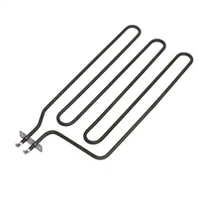
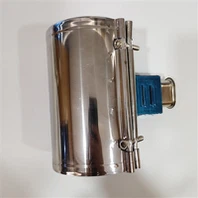
Core Principle: The Joule Heating Effect
Resistance wire operates on a fundamental law of physics: Joule's Law. When electric current flows through any conductor, collisions between moving electrons and the conductor's atomic structure convert electrical energy into thermal energy (heat). Resistance wire is engineered to maximize this conversion efficiently and controllably.
Step-by-Step Breakdown:
Electron Flow & Atomic Obstruction:
- When voltage is applied across your resistance wire, electrons are forced to move from the negative to the positive terminal.
- Unlike highly conductive metals like copper (where electrons flow relatively freely), the specific alloy of resistance wire (NiCr, FeCrAl, CuNi) creates a crowded "highway" for electrons.
- The atoms in these alloys have crystalline structures and electron configurations that inherently impede electron flow. Key elements like Chromium (Cr), Aluminum (Al), and Nickel (Ni) introduce obstacles through:Atomic Lattice Distortions: Different atom sizes disrupt the orderly flow path./Alloying Effects: Impurity atoms scatter electrons./Intrinsic High Resistivity: The base material property opposes current flow.

Energy Conversion via Collisions:
- As electrons collide with these atomic obstacles and lattice vibrations (phonons), they lose kinetic energy.
- This lost energy doesn't vanish; it transforms directly into heat energy within the wire itself. The more frequent and forceful the collisions, the greater the heat generated.

The Role of Electrical Resistance (R):
- The wire's electrical resistance (R) is the quantitative measure of its opposition to current flow

Power Dissipation = Heat Output:
- the rate of heat generation (Power, P in Watts) is governed by Joule's Law
- Current (I) is Key: Heat generation scales with the square of the current (I²). Doubling the current quadruples the heat output. This is why precise current control is vital for temperature regulation.
- Voltage (V) & Resistance (R): For a given voltage, higher resistance (R) leads to lower current (I = V/R) but also increases P = V² / R. Design involves balancing V, I, and R to achieve the desired P without exceeding wire limits.

Temperature Rise & Equilibrium:
- The wire heats up rapidly due to I²R losses.
- It simultaneously loses heat to its surroundings via radiation, convection, and conduction.
- An equilibrium temperature is reached when the heat generated (P) equals the heat dissipated. This operating temperature is critical and must stay below the wire's maximum rating.

Design Factors Impacting Function:
- Surface Load (W/cm²): The power density radiating from the wire surface. Exceeding the alloy's rating causes overheating, oxidation failure, and short lifespan. Thicker wire allows higher surface load.
- Coil Geometry: Coiling increases wire length in a small space, boosting R locally. Pitch (space between coils) affects heat dissipation – tighter pitch traps more heat, raising wire temperature.
- Environment: Air, inert gas, vacuum, or corrosive atmospheres drastically impact heat dissipation rate, oxidation, and lifespan. Your element design must account for this.